Inca Trail 2027 permits are now on sale! Secure your spot before they sell out. Book here!
Cusco Carnival: The Awakening of Joy in the Navel of the World
Cusco doesn't just live off its glorious Inca past; it pulses with a vibrant present. If you thought you had seen everything the Imperial City has to offer, get ready: the Cusco Carnival is an explosion of life, water, and tradition that redefines the traveler's experience in the Andes.
📅 When does the magic happen?
The Carnival is a movable feast governed by the liturgical calendar, but it always has one main protagonist: the month of February.
Compadres Day: Thursday, February 5th (2026).
Comadres Day: Thursday, February 12th (2026).
Central Day (Carnival Sunday): Sunday, February 15th (2026).
Octava (Carnival Closing): Sunday, February 22nd (2026).
Expert Tip: February is the month of carnivals throughout Peru, but in Cusco, the festive atmosphere is felt from the Three Kings Day in January until the end of February.
1. The Essence: More than a Party, a Ritual of Connection
Unlike other carnivals around the world, the celebration in Cusco is a perfect blend of the Andean worldview and traditions brought from Europe. It represents the end of the rainy season and gratitude to the Pachamama (Mother Earth) for the year's first harvests and the beginning of the cycle of abundance. Here, respect for the earth is celebrated with dances that make the cobblestones shake and the participants' hearts pound with strength.
2. Customs to Fall in Love With (and Get Wet)
If you visit Cusco during these dates, these are the mandatory stops on your mental itinerary:
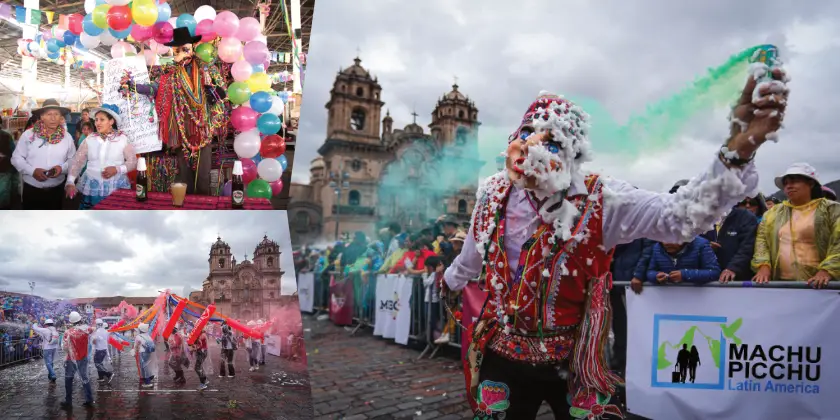
Compadres and Comadres: The two weeks leading up to the main Sunday are dedicated to strengthening bonds of friendship. Life-sized satirical dolls representing community characters are created and hung from poles and balconies. It is the art of healthy mockery at its finest!
Carnival Sunday: The Plaza de Armas becomes the epicenter. Dance groups from all provinces arrive with their multicolored costumes for the great parade.
The Yunza or Cortamonte: The climax of the party in the neighborhoods. A tree decorated with gifts (blankets, buckets, toys) that couples must chop down to the rhythm of huayno while dancing around it. Whoever delivers the final axe blow organizes the party the following year!
Water and Foam War: There are no hierarchies here. Tourists and locals join in a pitched battle of water balloons and white foam. It is the necessary catharsis before Lent.
3. The Taste of Carnival: The Cusco Puchero
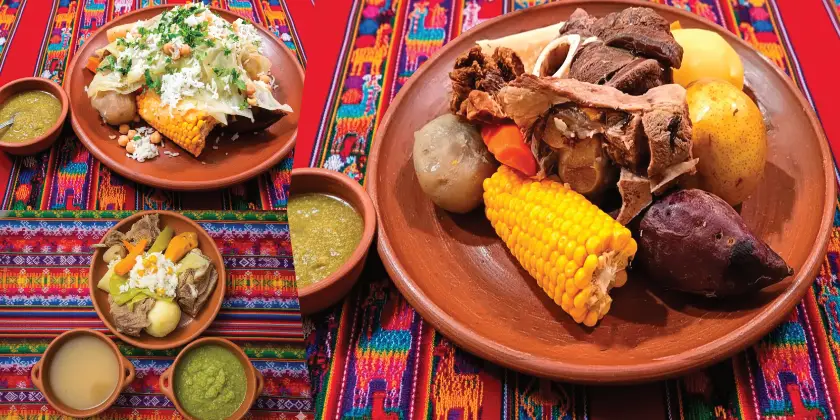
As in every traditional festival, the Carnival has its representative dish; here, the absolute protagonist is the Puchero or Timpu, which is prepared only during these dates.
Foodie Fact: It is a powerful broth containing beef, lamb, charqui (dried meat), cabbage, potatoes, moraya (white dehydrated potato), corn, rice with chickpeas, and sweet potato—some even more traditional versions include pears or peaches. It is served dry, with the broth on the side, and like any good traditional dish, it cannot be missing its uchucuta (chili) ground in a batan. It is, literally, pure energy to keep on dancing.
4. What does it represent for the world?
The Cusco Carnival is proof that Cusco is a living destination. For content marketing, this represents authenticity. The modern traveler no longer just wants to see a photo; they want to be part of the "comparsa," get wet in the plaza, and understand why the people of Cusco laugh so loudly.
💡 Tips for your visit:
Dress in layers: Cusco's weather is unpredictable and the water from the balloons is very cold!
Protect your gear: If you are going to record content, use waterproof cases. Foam and water are everywhere.
Open your heart: Don't just be a spectator; join the dance when invited. The magic of Cusco is in its people.

 Sales
Sales